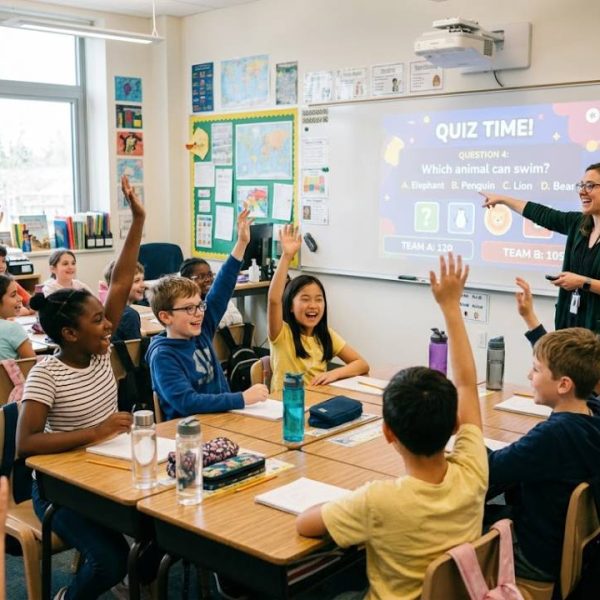
Classrooms are changing fast, and one of the most powerful shifts is the move from traditional quizzes to interactive, game-like experiences. Instead of rows of silent students ticking boxes on paper, teachers are now watching learners collaborate, compete, and engage with content in ways that boost memory, motivation, and real understanding. Turning simple question-and-answer routines into playful challenges can transform assessment from something students dread into something they actively look forward to.
1. From Fear to Fun: Reducing Test Anxiety
Classic quizzes often trigger stress, especially for students who struggle with time pressure or test formats. When quizzes become games, the emotional tone changes. Leaderboards, team play, and low-stakes rounds make “testing” feel like practice instead of judgment. Students still show what they know, but they’re doing it in a playful, less intimidating environment that encourages effort over perfection.
2. Immediate Feedback That Actually Sticks
Traditional quizzes can take days to grade, which means students may never connect their mistakes to the moment of confusion. Game-based quizzes provide instant feedback: correct answers get rewarded, wrong answers trigger helpful hints, and students can immediately try again. This rapid loop of action, feedback, and correction cements concepts far more effectively and keeps students curious rather than discouraged. Outside of education, digital creators rely on similar instant feedback loops—and even strategies like quality backlinks—to see fast, measurable results from their efforts.
3. Higher Engagement Through Meaningful Competition
Healthy competition is a powerful motivator. Game-like quizzes leverage points, levels, badges, and time-based challenges to keep attention high. Instead of passive note-taking, students race to solve problems, try to beat their previous scores, or collaborate to win team rounds. This competitive element transforms “Do I have to do this?” into “Can we play again?”—a simple but profound shift in engagement.
4. Personalization: Different Paths, Same Destination
Game-based platforms make it easy to adapt quizzes to individual needs. Teachers can adjust difficulty levels, question types, and pacing so each learner faces an appropriate challenge. Some students might unlock more complex problems as they advance, while others might receive additional scaffolding or hints. This personalization keeps students in the “sweet spot” between boredom and frustration, supporting both struggling learners and high achievers in the same classroom.
5. Better Retention Through Repetition That Doesn’t Feel Repetitive
Mastery requires repetition, but doing the same worksheet over and over quickly becomes tedious. Turning quizzes into games allows for repeated exposure to the same concepts while varying the context—different question formats, new storylines, escalating difficulty, or timed rounds. Students keep practicing, but to them it feels like trying to beat a level, not doing extra homework. The content cycles enough times to stick, without the mental fatigue that usually comes with drilling.
6. Real-Time Data for Smarter Teaching
Every question answered in a game-based quiz generates data. Teachers can see which topics cause the most mistakes, which students consistently struggle, and which questions might be poorly worded. Real-time dashboards and reports make it possible to identify learning gaps instantly and adjust instruction on the fly. Instead of waiting for a big test to reveal problems, teachers can intervene early, reteaching or enriching exactly where it’s needed.
7. Building Collaboration and Communication Skills
Not all quizzes have to be individual efforts. Team-based game modes encourage discussion, strategy, and negotiation. Students debate answers, defend their reasoning, and learn how to listen to peers under time pressure. These activities build soft skills—communication, leadership, conflict resolution—that traditional quizzes rarely touch, while still reinforcing academic content.
Turning quizzes into games changes a classroom because the software starts responding to the group instead of waiting for the teacher. Scaled up, that responsiveness is the whole premise behind agentic ai and the sectors now experimenting with it. The pattern is the same whether the stakes are a spelling test or a care pathway.
8. Encouraging a Growth Mindset
In a typical quiz, a low score can feel like a permanent judgment. In a game, losing simply means “try again.” Game-based quizzes naturally promote a growth mindset: students see improvement over multiple rounds, learn from past mistakes, and experience progress as they unlock new levels or badges. Failure becomes information, not identity, which is crucial for long-term resilience and academic confidence.
9. Making Abstract Concepts Concrete
Games are especially effective for subjects that feel abstract or difficult. Math problems can become puzzles; vocabulary can become scavenger hunts; history can become timelines and missions. By embedding questions in stories, scenarios, or interactive visuals, teachers can help students build stronger conceptual understanding and mental models, rather than just memorizing disconnected facts.
10. Inclusive Experiences for Diverse Learners
Game-based quizzes support multiple learning styles. Visual learners benefit from icons, colors, and graphics; auditory learners from narration or sound effects; kinesthetic learners from fast-paced, interactive tasks. Accessibility features—such as adjustable timers, read-aloud options, or simplified interfaces—can also help students with varied needs participate fully. When used thoughtfully, these tools make assessment more inclusive than one-size-fits-all paper tests.
11. Stronger Classroom Culture and Motivation
When quizzes are fun, they stop being “gotcha” moments and become shared experiences. Classes build rituals around review games, celebrate high scores, and cheer on peers. This positive atmosphere improves relationships between students and teachers, making it easier to ask questions, admit confusion, and take academic risks. Classroom culture becomes one where learning is an active, communal process rather than a solitary obligation.
Conclusion: Playful Assessment, Serious Results
Turning quizzes into games doesn’t mean abandoning rigor or lowering expectations. It means packaging challenge in a way that students actually want to engage with. By reducing anxiety, increasing motivation, providing instant feedback, and generating rich data, game-based quizzes create more meaningful learning experiences for every student. As classrooms continue to evolve, embracing playful, interactive assessment will be a key step in building environments where curiosity, effort, and achievement thrive together.