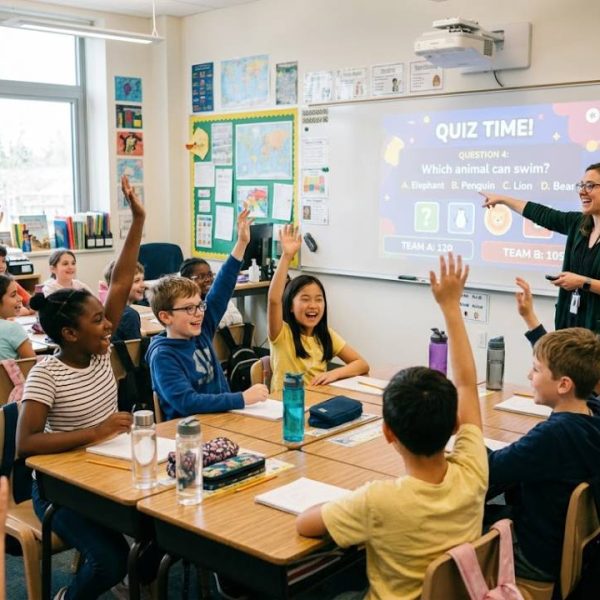
When learning experiences start to look and feel more like interactive challenges than traditional lectures, student attention changes dramatically. Instead of passively absorbing information, learners begin to explore, experiment, and compete—behaviors that naturally deepen engagement. This shift is at the heart of game-inspired education, where the mechanics that make games irresistible are used to make lessons more memorable and motivating.
1. Instant Feedback Turns Confusion into Curiosity
In a typical classroom, students often wait hours or days to find out whether they understood a concept correctly. Game-style learning flips that model by providing instant, clear feedback. Whether it’s a score, a progress bar, or a quick “correct/try again” message, learners know right away how they’re doing.
That immediacy matters. Quick feedback reduces frustration, prevents small mistakes from snowballing into bigger gaps, and transforms confusion into curiosity. Instead of giving up, students are more likely to think, “What can I try next?” This simple loop—attempt, feedback, adjustment—is the same loop that keeps players glued to their favorite games and can just as easily keep students focused on a lesson or skill.
2. Clear Goals Make Learning Feel Purposeful
Successful games always communicate a clear objective: finish the level, solve the puzzle, unlock the achievement. When educators borrow this structure and turn lessons into missions or quests, students instantly understand what they’re working toward and why it matters.
Well-defined goals break big, intimidating topics into small, manageable steps. Completing one objective naturally leads into the next. This goal-based design also makes it easier to organize curriculum across languages and cultures. When learning materials need to reach students worldwide, partnering with professional document translation services ensures that instructions, goals, and challenges remain just as clear and motivating in every language.
3. Challenge Levels Keep Students in the “Sweet Spot”
The most addictive games aren’t easy; they’re finely tuned. The first levels build confidence, then the difficulty ramps up just enough to stay exciting. Game-inspired learning uses the same principle: tasks start simple and grow more complex as students gain skills.
This progression keeps learners in a “sweet spot” between boredom and anxiety. If a task is too easy, students disengage; if it’s too hard, they shut down. Gradual difficulty levels, adaptive quizzes, and tiered activities help educators keep every student challenged at just the right level, whether they’re advanced or still catching up.
4. Rewards and Progress Tracking Boost Motivation
Badges, leaderboards, points, streaks—these mechanics are everywhere in games for a reason: they work. When students can see their progress visually, they feel a strong urge to keep moving forward. Every completed mission or unlocked badge signals, “You’re improving.”
These rewards don’t have to be flashy to be effective. Simple progress bars, experience points, or skill trees turn abstract growth into something tangible. Over time, the external motivation of rewards often evolves into internal motivation: students start caring about mastering the subject, not just earning the next badge.
5. Storytelling Makes Information Stick
Many games succeed because they tell compelling stories. Characters, conflicts, and worlds give context to every challenge. Learning can borrow the same approach. When lessons are framed as part of a larger narrative—solving a mystery, completing a mission, helping a virtual community—students begin to care about the outcome.
Story-based learning transforms dry facts into meaningful experiences. Instead of memorizing isolated details, students remember the role those details played in the story. This context helps information stick longer, making study time more efficient and outcomes stronger.
Engagement rises when a format gives someone a reason to keep going, and that lesson is not confined to classrooms. The most effective content marketing strategies borrow the same mechanics of progression, feedback and a clear payoff to hold an audience through a long piece. Attention has to be earned in both settings.
6. Safe Failure Encourages Experimentation
In most games, failure isn’t the end—it’s part of the process. Players expect to lose a few times before beating a boss or solving a puzzle. That mindset is incredibly powerful in education. When students know they can “retry the level” without stigma, they’re more willing to experiment, take risks, and learn from mistakes.
By treating errors as feedback instead of judgment, game-style learning lowers anxiety and builds resilience. Students focus less on avoiding failure and more on improving strategy. Over time, this shifts their mindset from “I’m bad at this” to “I haven’t figured it out yet.”
7. Social Play Turns Classrooms into Communities
Many modern games are social: players cooperate, compete, and communicate constantly. When these social dynamics enter the classroom, learning becomes a shared experience. Team quests, cooperative challenges, and peer-vs-peer games encourage students to talk, plan, and solve problems together.
Collaboration helps shy students participate, gives stronger students leadership opportunities, and exposes everyone to new approaches. It also makes the classroom feel less like a test and more like a team effort, increasing accountability and a sense of belonging.
8. Interactivity Turns Passive Listeners into Active Participants
In a traditional setting, learning can become passive: students listen, read, and occasionally answer questions. Game-informed lessons change that dynamic. Students click, drag, build, choose, simulate, and respond. Every action pushes the learning experience forward.
This constant interaction keeps attention from drifting and invites learners to explore content at their own pace. The more decisions students make, the more they invest in the outcome—and the more deeply they process what they’re learning.
Conclusion: Turning Engagement into Lasting Learning
When learning feels like a game, students don’t just have more fun—they pay closer attention, retain more information, and develop stronger problem-solving skills. Instant feedback, clear goals, adjustable difficulty, meaningful rewards, and rich stories tap into natural human drives: curiosity, mastery, and connection.
Whether used in physical classrooms, online courses, or self-paced study tools, game-style strategies turn education into an active, immersive experience. By combining thoughtful design with inclusive content that reaches learners in every language and culture, educators can transform disengaged students into motivated, confident participants in their own learning journey.