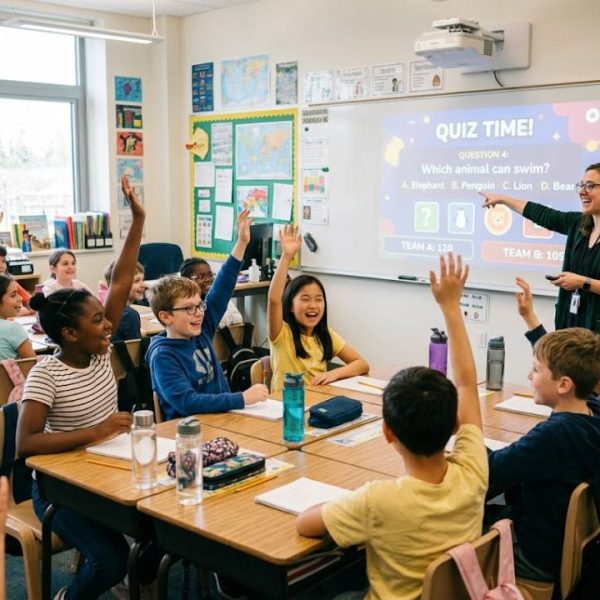
Interactive quizzes have turned review time into the part of the lesson students look forward to. When learners compete, earn points and see instant feedback, they remember more and stay focused longer. This guide explains how teachers and trainers can use online quiz platforms to make learning active and enjoyable.
Start With a Clear Learning Goal
Decide what students should know by the end of the quiz. A focused goal keeps questions relevant and makes results easy to interpret.
Keep Questions Short and Simple
Short questions with one clear answer reduce confusion. Avoid tricks, and remember that the aim is to check understanding, not to catch learners out.
Mix Question Types
Combine multiple choice, true or false and short answers. Variety keeps attention high and tests knowledge in different ways.
Use Images to Support Ideas
A diagram, map or photo can explain a question faster than words. Visual prompts also help students who find reading difficult.
Add Friendly Competition
Points, streaks and leaderboards motivate many learners. Keep the tone light, celebrate effort and avoid shaming those who score lower.
Play in Teams for Cooperation
Team games encourage discussion and let quieter students contribute. Shared answers also reveal common misunderstandings you can fix on the spot.
Use Quizzes as a Warm Up
Five quick questions at the start of class remind students of last lesson. This retrieval practice strengthens memory far more than rereading notes.
Review Results Immediately
Instant results show which topics need more explanation. Spend a few minutes on the most missed questions while students are still curious.
Track Progress Over Time
Compare scores across weeks to see growth. Share improvement with students, because progress is often more motivating than a single grade.
Support Students Who Learn in Other Languages
Classrooms are increasingly international. A english to ukrainian translation of key instructions and vocabulary lists helps Ukrainian speaking students join quizzes with confidence.
Prepare Documents for Studying Abroad
Learners who move between schools often need records translated. A guide on diploma transcript translation explains how academic papers are prepared for new institutions.
Follow Official Education Guidance
Teachers should respect local rules on data and online tools. The US Department of Education shares helpful information about student privacy and learning technology.
Protect Student Privacy
Use nicknames, avoid collecting unnecessary data and explain how results are stored. Privacy builds trust with students and parents.
Adjust Difficulty to Your Group
Start with easy questions to build confidence, then raise the challenge. A well paced quiz keeps everyone engaged without frustration.
Offer Time to Think
Allow enough seconds for reading and answering. Pressure can be exciting, but too little time penalises careful thinkers.
Encourage Students to Create Questions
Writing a quiz is a powerful way to learn. Ask students to design questions for classmates and review them together.
Use Quizzes for Homework
Set a short self paced quiz as practice. Students can try again, learn from mistakes and arrive in class better prepared.
Interactive quizzes keep learning active because every answer gives instant feedback, which is exactly what passive reading lacks. Language study benefits from the same loop, and newer apps go further by generating exercises around the mistakes each learner actually makes. Anyone comparing ai tools for language learning should look for that kind of adaptive practice, while remembering that quizzes and chatbots build recall far better than they build the confidence that only comes from speaking with real people.
Connect Quizzes to Real Life
Questions based on everyday examples help students see why the topic matters. Real context makes facts easier to remember.
Include Everyone
Check that fonts are readable, colours have good contrast and devices work for all students. Inclusive design lets every learner take part.
Give Kind Feedback
Explain why an answer is correct and what to remember next time. Supportive comments turn mistakes into progress.
Mix Online and Offline Activities
Follow a digital quiz with discussion, drawing or a short writing task. Switching activities keeps energy balanced and deepens understanding.
Share Quizzes With Colleagues
Teachers who exchange quizzes save time and discover new ideas. A shared library grows into a valuable resource for the whole school.
Update Quizzes Regularly
Refresh questions each term so content stays accurate and interesting. Old quizzes can become predictable and lose their spark.
Reward Effort Not Just Scores
Praise persistence, creativity and improvement. A culture that values effort encourages even hesitant students to participate.
Reflect After Each Session
Ask what worked, what confused students and what you would change. Short reflection helps you refine your teaching with every lesson.
Keep Technology in Balance
Digital tools are most effective when they support good teaching. Use quizzes where they add value and keep room for conversation and hands on work.
Plan Your Quiz Schedule
Decide how often you will run quizzes so students know what to expect. A steady rhythm builds good study habits.
Prepare Backup Plans
Internet connections fail sometimes. Keep printed questions ready so the lesson continues without stress.
Celebrate Class Milestones
Mark achievements such as a class average improvement with a small celebration. Shared success builds a positive group spirit.
Listen to Student Ideas
Ask learners which formats they enjoy. Their suggestions often lead to creative games you would not have imagined.
Final Thoughts
Interactive quizzes work best when they are clear, kind and connected to real learning goals. Try one short game this week, watch how students respond and refine your approach. Small experiments can make every lesson livelier.